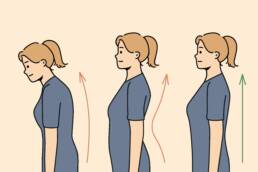

What’s the best way to correct your posture? Good posture takes effort. Long hours hunched over phones, tablets, and laptops can damage it. Fortunately, there are some simple ways to fix it. Doctors of Chiropractic take an overall, full-body approach to help with posture. They use chiropractic adjustments to correct spinal misalignments, which cause pain, muscle spasms, and poor posture. Here are some common questions about lousy posture and chiropractic care.
Table of Contents
ToggleCan a Chiropractor Fix Bad Posture?
Chiropractors are especially well suited to correct bad posture. Although they deal with the entire musculoskeletal system, chiropractors spend most of their time ensuring the spine is healthy. Because when the spine is healthy, the rest of the body will function better.
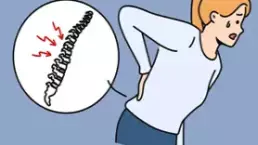
Correcting your posture isn’t just about looking better, standing taller, and feeling more confident. It’s also about improving health in general. People with poor posture constantly put extra pressure on the spine’s discs, increasing the risk of back pain and injury.
Maintaining the natural S-curve of the spine is essential for maintaining the spine’s neutral posture. These natural curves mean the spine is structurally sound in its natural curvature. When your posture is poor, it causes the spine to come out of proper alignment, which means it’s structurally vulnerable.
Since your nervous system travels through the spine, poor posture can affect how the rest of your body feels and even the movement of other joints throughout the body. There are many causes of poor posture. Improper lifting can contribute to bad posture. Often, it isn’t just one thing but a combination of the following:
- Stress
- Lifestyle
- Mood/Emotions
- Weight Gain
- Pregnancy
- Carrying Heavy Backpacks
- Wearing High Heels
- Natural Effects of Aging
Therefore, fixing posture is more complex than just remembering to stand up straight.
Signs You Have Poor Posture
Many people only realize they have bad posture once they start experiencing pain or stiffness. Posture isn’t something most of us are conscious of until it needs fixing. So, here are some signs you have bad posture:
- Regular headaches
- Pain at the front of your shoulders
- Neck pain
- Stiff upper back
- Rounded upper back
- Rounded shoulders
- Forward Head Position
What’s the Best Way to Correct Your Posture?
An integrative Chiropractor will never use surgery to fix posture—or any other problem, for that matter. Chiropractic care is noninvasive and drug-free. A chiropractor will take a whole-body approach to poor posture, getting at the root of the problem instead of simply addressing the symptoms.
Any spinal surgery has inherent risks, so it’s always best to exhaust conservative treatment options first. Some extreme circumstances may warrant surgery, but most posture correction doesn’t require surgery.
How Long Does It Take to Fix Hunchback Posture?
Unfortunately, posture correction is usually a process that takes time. Depending on the severity of your poor posture, you could be standing up straighter in just a few weeks. If you’re experiencing pain from poor posture, chiropractic care can provide relief in as little as one to three sessions. Hunchbck posture typically stems from upper back and lower cervical problems. Both cervical and thoracic problems respond well to Chiropractic adjustments.
But posture correction isn’t all about chiropractic visits. You’ll need to do things on your own to help correct the imbalance. Here’s a look at a typical posture correction diagnosis and treatment.
- Medical history
- Thorough examination and diagnosis
- Measuring posture imbalances and misalignments
- Pain relief (if necessary)
- Spinal adjustments
- Specific types of stretches
- Dry Needling
- Exercises (often performed at home)
- Lifestyle and ergonomic tips
How long it takes to correct your posture depends entirely on the severity of your condition. While not an overnight fix, chiropractic can significantly improve your posture and pain levels. Once you have addressed the mechanical causes of your poor posture, you will still need to work on your posture “habits.”
What Are the Different Types of “Bad Posture”?
There are different types of poor posture, each requiring slightly different methods to fix. Below are some common types of poor posture that chiropractors can help with.
What is Forward Head Posture?
Forward head posture, or “tech neck,” often results from leaning the head and neck forward to look at our phone, read a book, or type on a keyboard. Fixing tech neck is generally a matter of muscle strengthening, spinal alignment, and good habits. A chiropractor will likely give you simple stretching and strengthening exercises at home. They may also tell you to set an alarm when reading or working on the computer. It’s best to spend 30 to 40 minutes at your computer.
What is “Text Neck”?
Text neck is a relatively new problem related to the increased “screen time” we are all experiencing. The term “text neck” describes a muscle imbalance due to prolonged poor posture resulting in the head and shoulders jutting. “Upper-crossed syndrome” (UCS) occurs when the muscles in the upper back tighten to counteract tight chest muscles. The chest muscles become tighter because of our hunched position while gripping a phone or typing on a keyboard. These muscle imbalances cause misalignments in the spine, resulting in back pain, neck pain, and headaches.
- Lateral Neck Stretch
Sit (or stand) in a chair with good posture, meaning your shoulders back and your head in a neutral position. Tilt your left ear sideways toward your left shoulder, keeping the right shoulder relaxed. To increase the stretch, grasp the bottom of your chair with your right hand. Stretch to both the left and right, switching hands as needed. Hold this stretch for at least 30 seconds for 2-3 sets. Then, switch directions. Keep your upper body relaxed and pain-free.
- Neck Rotation Stretch
Again, sit in a chair, avoiding poor posture. Ensure the neck is neutral (slightly tucked) before starting. Rotate your head to the right, looking over your right shoulder. When you can’t go further, place your left hand on your cheek, gently apply pressure, and hold. Do not force this stretch, and keep your neck neutral. Hold for 5-10 seconds, then switch to the other side. Repeat 10-20 times total on each side.
How Do You Fix “Text Neck”?
Fixing tech neck is generally a matter of muscle strengthening, spinal alignment, and good habits. Set an alarm when reading or working on the computer. Limiting yourself to 20 to 30 minutes at your computer without changing position is best.
Despite all the benefits of technology, there are also some adverse effects and implications for our health. Studies have shown that prolonged use of smartphones can negatively affect our posture and respiratory function (breathing). Because of gravity, the further we allow our heads and shoulders to round over our phones or keyboards, the more weight the neck and back perceive. An adult’s head weighs about 10-12 pounds. When seated in an upright position, our spines easily carry the weight of our heads. If we drop our heads down 60 degrees, the spine now carries the equivalent of 60 pounds!
Can a Chiropractor Help With “Hunchback”?
“Hunchback” posture is another term for kyphosis, which can result from poor posture or be congenital. Either way, chiropractic can help. People with a “hunched” back or “Dowager’s Hump” due to poor posture can benefit significantly from chiropractic care.
Spinal adjustments are often used in the middle back to “teach” proper spine alignment. Chiropractic adjustments combined with muscle stretching, muscle strengthening, and lifestyle tips can go a long way to correct this problem.
How to Fix Slouching
Slouching can mean a few different things. Sometimes, slouching is a natural byproduct of forward head posture. Usually, it’s characterized by rounded shoulders, creating a hollow chest and an unnaturally rounded upper back. Another term for this is Dowager’s hump. Chiropractic care can help with spinal adjustments, stretches, and exercises.
- Chest Stretch
Stand sideways in a doorway or door and stand tall. Bend your elbow 90 degrees and bring up to shoulder height with your hand up and facing forward. Place your upper arm and elbow against the doorway and lean into it to feel a stretch in your chest. Thirty seconds to one minute works well. Repeat on the other side.
- Upper Back Isometric Exercise
Lie on your stomach, facing the floor, and your arms straight before you. Pull your elbows at your sides as much as you can. Hold in this position for 5 to 10 seconds, and then return your arms in front of you. You should feel the contraction in your back muscle when you hold this position. Next, lift your chest slightly off the floor to engage your back muscles more efficiently.
The Best Way to Correct Your Posture and Relieve Back Pain
Poor posture can cause all kinds of problems throughout the body. It can make one’s shoulders uneven, cause hip misalignments, and weaken the spine’s structure. Many people who suffer from bad posture also suffer from back pain. They have trouble sleeping with back pain and doing everyday activities that give their lives meaning.
For better or worse, we aren’t going to stop using technology. It isn’t the enemy. Just like pie, alcohol, or sunlight, moderation is key. For starters, limit your phone and tablet time, and most importantly, move! “Motion is lotion”! We were designed to move, not to spend our days sitting in front of a computer or steering wheel. Set a timer for yourself to get up, walk, do some jumping jacks, stretch, or do anything that doesn’t involve sitting! Any position can become painful if held for too long. The exercises listed above, along with chiropractic adjustments, can all help to improve your posture.
What’s the Best Way to Correct Your Posture?
Poor posture can cause all kinds of problems throughout the body. It can make one’s shoulders uneven, cause hip misalignments, and weaken the spine’s structure. Many people who suffer from bad posture also suffer from back pain. They have trouble sleeping with back pain and doing everyday activities that give their lives meaning.
The good news is that Chiropractic care can be the best way to correct your posture. But since it doesn’t take only one day for a person’s posture to degrade, it will take more than one day for an integrative Chiropractor to fix it.
Luckily, many people experience posture-related pain relief quickly. And as the pain goes away, it becomes easier to work with your chiropractor to improve your posture. There are many simple exercises that can help relieve your back pain as well as different healthcare professionals that can lend a hand as well. Pretty soon, you don’t have to think about it anymore; you maintain the proper posture automatically!
Spinal Health and Technology
For better or worse, we aren’t going to stop using technology. It isn’t the enemy. Just like pie, alcohol, or sunlight, moderation is key. For starters, limit your phone and tablet time, and most importantly, move! “Motion is lotion”! We were designed to move, not to spend our days sitting in front of a computer or steering wheel. Set a timer for yourself to get up, walk, do some jumping jacks, stretch, or do anything that doesn’t involve sitting! Any position can become painful if held for too long.
Still Wondering, “What’s the Best Way to Correct Your Posture?”
Our office is conveniently located for patients in Arvada, Denver, and Wheat Ridge, Colorado! Looking for a Denver Chiropractor? Do you still have questions? Contact us! Still not sure? Read some of our 5-Star reviews and see what patients have to say. We’ve been helping patients in Arvada, North Denver, and Wheat Ridge, Colorado, for over 20 years. Learn more about the conditions we treat on our Health Articles page. Ready to start feeling better? Book an appointment online!

Ready for an expert opinion? Get in touch today!
With a legacy of more than 25 years, our team specializes in helping individuals triumph over back pain, neck discomfort, and persistent headaches, all without relying on addictive medications or risky surgical procedures.
Like this article? Spread the word!
Related Posts